How Should You Plan Landscape Lighting for an Austin Yard?

An Austin backyard can look finished by day and feel difficult to use after dark. The path to the gate vanishes, the patio light shines straight into your eyes, or the garden turns into a black wall outside the window. Adding more fixtures is not always the right answer. Start by deciding what you actually need to see.
At GardenGOAT, we provide landscape lighting design and installation as part of a complete outdoor plan. We recommend listing the routes and activities that matter first, then picking a few features you would like to enjoy at night. This guide walks through that process, from the first sketch to the final evening check.
Where should you put landscape lighting first?
Begin with the places you use after dark. Walk from the back door to the table, the gate, and every other regular destination. Note the steps, the changes in direction, and the spots where an existing light makes it harder to see comfortably.
Build the first list around tasks:
- Following the route between the house and the patio.
- Picking out a step or change in level.
- Working a latch at the side gate.
- Setting food down on a serving table.
- Sitting outside with no bright lamp in your sightline.
Mark these locations on a simple plan. Then add any garden feature you would like to highlight, such as a stone texture or a planting bed. If the budget is tight, ask for the everyday routes to be priced as a complete first stage. Decorative accents can be evaluated on their own.
That gives the installer a purpose for every fixture, and gives you a clear way to judge the proposal.
How can you light a path without lighting the whole yard?
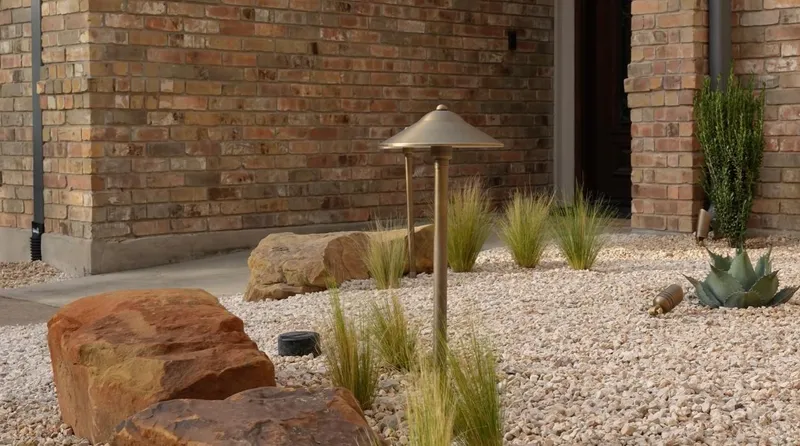
Ask for light aimed at the walking surface, with brightness matched to that task. DarkSky International and the Illuminating Engineering Society's outdoor lighting principles recommend useful, carefully directed light at the lowest level that works. They also advise limiting spill beyond the intended area.
Use that guidance as the starting point for your design review. Ask what each fixture is meant to illuminate and where its light will stop. Review the view from the house, from a seated position, and from the neighboring property boundary.
Avoid picking a fixture count just to produce a perfectly spaced row. Instead, ask the designer to show how the route will read at night. A turn, a gate, or a step may need different treatment from a straight stretch of path.
Bring up the existing porch and garage lights as well. A new path-lighting plan should be reviewed alongside the lights you already use, not judged as an isolated display.
Should you use warm light and separate controls?
Warm light and thoughtful controls are worth comparing. DarkSky recommends warmer-colored light where possible, plus controls that limit lighting to the times it is actually needed. You can apply that principle without forcing every area to switch on and off together.
For your plan, consider separate settings for the main walking route, the dining area, and the decorative accents. Ask which controls work with the proposed fixtures and how you will operate them day to day.
The U.S. Department of Energy's exterior lighting guidance explains how controls can match lighting to activity and conditions. Its purchasing guidance targets federal facilities, so its cost examples are not estimates for a residential backyard.
Ask for a simple demonstration of any proposed controls. If you would rather have a physical switch than a phone app, say so early. The best control arrangement for your home is the one you understand and will actually use.
How should lighting fit patios, decks, and planting beds?
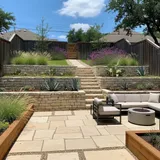
Place lighting around the planned use of each space. Show your designer where the chairs will face, where food will be served, and which doors must stay clear. Include future furniture if the outdoor space is still under construction.
For a new patio, ask to see the fixture and cable routes before the paving plan is finalized. For deck construction, talk through any integrated lighting with the deck builder so the details stay coordinated. In planting beds, ask how fixtures will be reached for adjustment and cleaning.
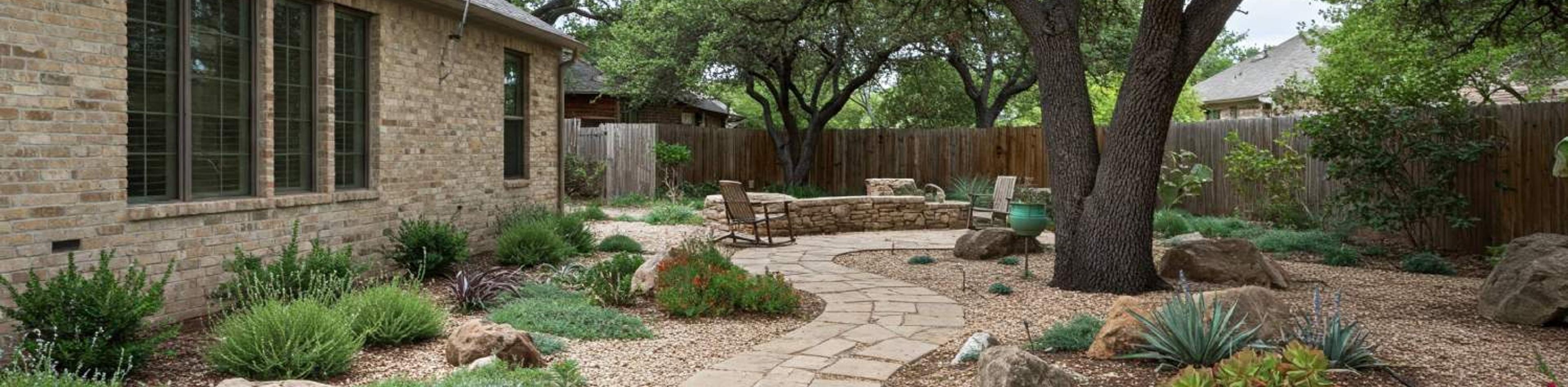
Our Indigo project combines landscape lighting with planting beds, sandstone boulders, regrading, and drip irrigation. It is a useful example of treating lighting as part of the landscape rather than a separate purchase made after everything else is finished.
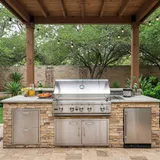
If cooking is part of the plan, our outdoor kitchen guide can help you think through serving and prep areas. Get those tasks clear before choosing decorative lights.
What should an installation quote include?
A useful quote should tell you what gets installed, where it goes, and what setup is included. A fixture count on its own leaves too many questions open.
Request the following details:
- The fixture manufacturer, model, finish, and light output.
- A location plan showing the purpose of each fixture.
- The power equipment and controls included in the scope.
- Cable routes and the proposed installation method.
- Any electrical work needing separate coordination.
- Restoration of any disturbed paving, mulch, or planting areas.
- Setup, nighttime adjustment, and owner instructions.
- The product and workmanship warranty terms.
Ask whether the price is based on a measured site visit or an early allowance. If you are comparing proposals, hand each installer the same priorities and layout.
Ask what happens when a fixture position changes during the evening review, too. Knowing which adjustments are included helps you judge the full service, not just the equipment list.
Can you add lighting without rebuilding the landscape?
Often the right starting point is a review of what can stay. Identify the existing fixtures, controls, and accessible routes before deciding what to replace. Ask the installer to test and assess the existing equipment rather than assuming it will work with the new design.
Walk the proposed installation route together. Point out irrigation lines you know about, recently planted areas, and paving you want protected. Ask what must be disturbed and how each area will be restored.
Before excavation, build utility locating into the plan. Texas811's guidance explains the notification process and the distinction between utility-owned and private lines. Ask who will arrange any needed private-line locating too.
If the landscape is already established, ask for a small set of options. One might use the easiest accessible routes, while another needs more site work to reach a preferred feature. Seeing the difference makes the added cost easier to weigh.
What should you check during a nighttime walkthrough?
Use the space the way you normally would. Sit in the chairs, walk to the gate, look out from the kitchen, and walk up to the house from the yard. Bring the people who will use the space so they can flag anything uncomfortable or confusing.
We recommend working through these questions:
- Can you follow the route you planned to light?
- Can you see a lamp directly from a favorite seat?
- Does any light reflect strongly in a window?
- Is an accent pulling more attention than you wanted?
- Does light cross a boundary where it serves no purpose?
- Do the controls deliver the settings you expected?
Try the system with your normal indoor and porch lights on, then try each outdoor setting separately. Photograph the positions you want adjusted and keep a short written list for the installer.
Do not judge the whole system from a single wide-angle phone photo. Your view while actually using the yard is the point of the exercise.
How do you plan for maintenance and future additions?
Ask for the equipment list, care instructions, and a simple record of the installed locations. Keep the controller instructions somewhere the household can actually find them. Before the crew leaves, have someone walk you through changing the schedule and turning the system off.
Discuss future additions now, even if you are not buying them yet. Ask the installer to explain whether the proposed system can take them and what would need to change. Do not assume an unused patch of garden means the system has spare capacity.
Include lighting in your broader landscape design plans. If a path will move or a deck will grow, share that before fixtures go in. A sketch of the future layout gives the installer something concrete to work from.
Set a reminder to review the lighting whenever furniture or plants change. The original aiming may no longer match the way you use the space.
Ready to plan your Austin landscape lighting?
Contact GardenGOAT with photos of your yard and a short list of what you want to do after dark. We can help you plan lighting around those activities, coordinate it with the landscape, and define a clear installation scope.