

Retaining Walls in Austin: Austin Stone, Permits & Costs

Retaining Walls in Austin: Austin Stone, Permits & Costs
If you own a home in Austin, chances are you've dealt with a sloped yard, a washed-out flower bed, or a hillside that turns into a mudslide after a heavy rain. The Hill Country is beautiful, but it comes with hilly terrain that can make your outdoor space hard to use. That's where retaining walls come in. A well-built retaining wall holds back soil, prevents erosion, and can turn a steep slope into a flat, usable area for a patio, garden, or play space. At GardenGOAT, we build retaining walls across Austin and the surrounding Hill Country areas every week. In this guide, we'll walk you through the most popular materials (including the classic Austin stone look), the City of Austin permit rules you need to know, and what it all costs.
Table of Contents
- Why Austin Homes Need Retaining Walls More Than Most
- Austin Stone and Other Popular Retaining Wall Materials
- City of Austin Retaining Wall Permits: What You Need to Know
- How Much Does a Retaining Wall Cost in Austin?
- Drainage: The Part Most People Forget
- When You Need an Engineered Retaining Wall
- How GardenGOAT Builds Retaining Walls for Austin Properties
Why Austin Homes Need Retaining Walls More Than Most
Austin sits on the Edwards Plateau, a region known for limestone bedrock, thin topsoil, and rolling hills. Many neighborhoods in West Austin, Steiner Ranch, Bee Cave, Lakeway, and Dripping Springs sit on slopes that range from 10 to 30 degrees. When heavy rain hits, and Austin averages about 35 inches a year with much of it falling in sudden bursts, water rushes downhill fast. Without something to hold the soil in place, erosion eats away at your yard, exposes tree roots, and can even threaten your home's foundation.
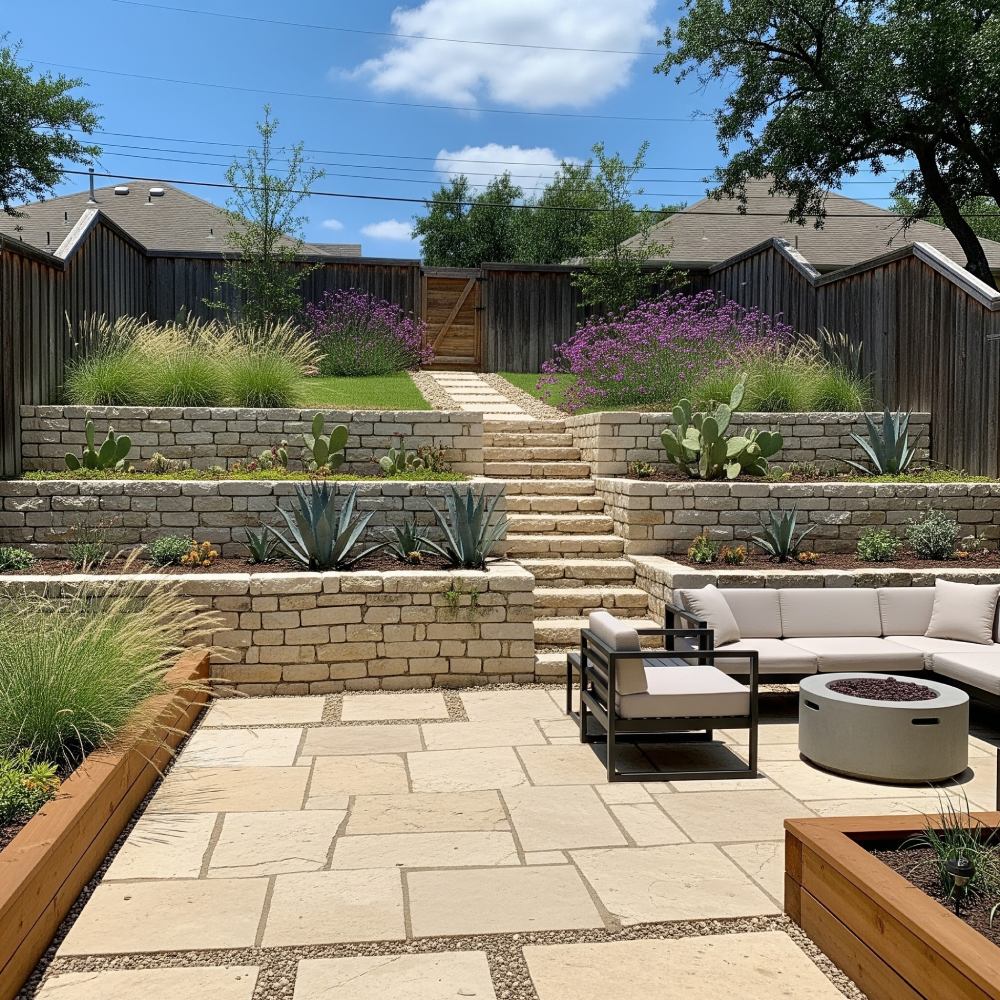
A retaining wall solves this problem by holding soil at different levels, almost like building shelves into your hillside. This creates flat terraced areas you can actually use. Many Austin homeowners use retaining walls to add usable patio space, protect foundations from soil pressure, create raised garden beds on sloped lots, and stop erosion along driveways and walkways. If your lot has more than a few feet of elevation change, a retaining wall is not just a design choice. It's a structural need.
Austin Stone and Other Popular Retaining Wall Materials
The material you pick for your retaining wall affects how it looks, how long it lasts, and what it costs. Here are the most common options we install across Austin.
Austin Stone (Natural Limestone)
Austin stone is the classic choice for Hill Country homes, and for good reason. It's a natural limestone that blends right into the local landscape. You'll see it on older ranch homes, newer custom builds, and everything in between. Austin stone retaining walls are strong, naturally weather-resistant, and look better as they age. The stone is typically cut into irregular shapes and dry-stacked or mortared into place. Expect to pay $35 to $60 per square foot of wall face, installed. Because each stone is unique, the final look has a handcrafted feel you can't get from manufactured blocks.
Concrete Retaining Wall Blocks
Concrete blocks are the most budget-friendly option for retaining walls in Austin. Brands like Pavestone and Belgard make interlocking blocks that stack without mortar, which speeds up installation. They come in several colors and textures that mimic natural stone. Concrete blocks run $20 to $35 per square foot installed and work well for walls up to about 4 feet tall. For taller walls, they still work but usually require a geogrid reinforcement system behind them.
Corten Steel
Corten steel retaining walls have become popular in modern Austin landscaping over the past few years. This is a type of steel that forms a rust-colored outer layer to protect itself from further corrosion. It gives a sharp, clean, modern look that pairs well with native plantings and minimalist designs. Corten steel walls are thinner than stone or block walls, which means they take up less space on tight lots. They typically cost $65 to $150 per square foot installed, depending on the height, thickness, and custom fabrication needed. The higher price reflects the material and specialized welding required.
Poured Concrete
Poured concrete walls are the strongest option for large or tall retaining walls. They're common in commercial projects and for walls over 6 feet where structural strength is the top priority. Poured concrete walls cost $30 to $50 per square foot and can be finished with stucco, stone veneer, or left exposed for an industrial look. They require forms, rebar reinforcement, and proper curing time (28 days to reach full design strength, though they can bear light loads after about 7 days).
City of Austin Retaining Wall Permits: What You Need to Know
This is the part that catches most homeowners off guard. The City of Austin lists work that is exempt from building permits on their website, and retaining walls over a certain height are not on that list. Skipping the permit process can lead to fines or forced removal.
Here's the basic breakdown. You likely need a permit if your retaining wall will be over 4 feet tall (measured from the bottom of the footing to the top of the wall). You also need one if the wall supports a surcharge, meaning there's a driveway, structure, or slope pushing extra weight against it. Walls in the Barton Springs Zone or other environmentally sensitive areas often have additional review requirements.
The permit process starts with a Tree Ordinance Review Application (TORA) if any protected trees are near the wall site. Austin's tree ordinance protects trees at two levels: protected trees have a trunk diameter of 19 inches or more, and heritage trees have a diameter of 24 inches or more (measured at 4.5 feet above the ground). Heritage trees cannot be removed except in very narrow circumstances. Building a wall within the drip line of a protected or heritage tree without approval can result in fines and mitigation fees that add up quickly.
For walls over 4 feet, the city requires engineered construction drawings stamped by a licensed Texas Professional Engineer. The engineer will design the wall based on soil conditions, slope angle, and drainage loads specific to your property.
Permit fees range from $150 to $500 depending on the scope of the project. The review process typically takes 2 to 6 weeks. At GardenGOAT, we handle the entire permit process from application to approval so you don't have to navigate it on your own. Contact GardenGOAT if you have questions about whether your project needs a permit.
How Much Does a Retaining Wall Cost in Austin?
Total cost depends on the wall height, length, material, and site conditions. Here are typical ranges for Austin projects based on what we see day to day.
A small wall under 3 feet tall and about 20 feet long using concrete blocks will typically cost $2,000 to $4,500. A mid-size Austin stone wall around 3 to 4 feet tall and 30 to 50 feet long usually falls between $6,000 and $15,000. A large engineered wall over 4 feet tall with drainage, grading, and permits can range from $15,000 to $35,000 or more.
Several factors push costs up. Rocky Austin soil is one of the biggest. Digging into limestone bedrock requires specialized equipment, and excavation costs can add $1,000 to $5,000 depending on how much rock needs to be removed. Steep slopes require more material and labor to build safe access for equipment. Drainage systems behind the wall (which we strongly recommend for every retaining wall) add $1,500 to $3,000 but protect your investment from water damage for decades.
Drainage: The Part Most People Forget
A retaining wall without proper drainage is a wall that will eventually fail. Water is the number one reason retaining walls crack, lean, or collapse. When rain soaks into the soil behind a wall, it creates hydrostatic pressure that pushes against the back of the wall. In Austin, this pressure builds quickly. East Austin has dense clay soils that hold water instead of letting it pass through. West Austin and Hill Country properties deal with thin soil over limestone bedrock, where water runs along the rock surface and pools behind walls. Either way, the result is the same: pressure that your wall has to handle.
Every retaining wall we build at GardenGOAT includes a drainage system behind it. This typically means a layer of gravel (at least 12 inches thick) behind the wall face, a perforated drain pipe at the base that carries water to a safe outlet, and weep holes or drainage gaps spaced every 4 to 6 feet along the wall. This setup keeps water from building up behind the wall and reduces the load the wall has to hold back. It's not the most exciting part of a retaining wall project, but it's the difference between a wall that lasts 5 years and one that lasts 50.
For properties with serious drainage challenges, we often combine retaining walls with French drains and grading solutions to manage water flow across the entire yard.
When You Need an Engineered Retaining Wall
Not every retaining wall needs an engineer, but many in Austin do. The general rule is that any wall over 4 feet tall needs engineering. But there are other situations where engineering is smart even for shorter walls.
If the wall supports a driveway, parking area, or building above it, the added weight (called a surcharge load) changes the structural requirements. Walls built on slopes steeper than 2:1 (meaning the ground rises 1 foot for every 2 feet of horizontal distance) also benefit from engineering. And if you're building on Austin's Edwards Plateau limestone, the engineer can design the footing to anchor properly into the rock instead of relying on soil friction alone.
An engineered design typically costs $1,500 to $4,000 for the drawings and calculations. It adds to the upfront cost, but it's required for the building permit and protects you from costly failures down the road.
How GardenGOAT Builds Retaining Walls for Austin Properties
At GardenGOAT, we've built retaining walls across Austin neighborhoods from Tarrytown and Zilker to Steiner Ranch and Dripping Springs. Our process starts with a site visit where we evaluate the slope, soil type, drainage patterns, and any protected trees on the property. From there, we design a wall system that fits your lot, your style, and your budget.
We work with all the materials covered in this guide, from Austin stone and concrete blocks to corten steel and poured concrete. For walls that need engineering, we partner with local licensed engineers who know Austin's soil and code requirements. We handle the City of Austin permit process, the Tree Ordinance Review, and coordinate any inspections needed during construction.
Most retaining wall projects in Austin take 1 to 3 weeks from start to finish, depending on the size and complexity. We always include drainage behind the wall because we've seen too many walls fail without it.
Ready to solve your slope problem or add usable space to your Austin yard? Contact GardenGOAT today to schedule a consultation. You can also visit our stone borders and retaining walls page to see examples of our work. Let's build something that lasts.