Planning a Privacy Fence in Austin? What to Consider First

You may already know why you want a new fence: the patio feels exposed, an old gate is awkward to use, or the boundary looks tired. Picking the boards is the visible part of the job. The more valuable early work is deciding what privacy means for your Austin property and where the fence can actually go.
At GardenGOAT, we provide fence installation alongside landscape design and outdoor construction. We suggest planning the fence from both sides of the decision: how you want the yard to feel, and what the property itself requires. Use these questions to get ready for a site visit and to compare complete proposals.
What do you want your privacy fence to block?
Begin with the specific view you want to screen. Sit at the patio table and look toward the neighboring yard, the street, or the driveway. Then stand at the back door. The view you need to block can shift between those two positions.
Mark the problem on a photo instead of simply requesting the tallest fence available. A boundary fence may screen a ground-level view while leaving an upstairs window in view. Your designer needs to understand that difference before drawing any solution.
Name the views you want to keep as well. You may want a private dining corner while still preserving an open outlook from the lawn. Note whether pets, a pool, or a service route add further requirements to the project.
Bring that list to the consultation. It can help you decide whether to replace the entire boundary, concentrate on one section, or pair fencing with another landscape feature.
How do you confirm where the fence should go?
Start with your survey and get any boundary uncertainty resolved before installation begins. An old fence's position should not be your only guide. Ask the project team which documents they need and whether a survey professional should clarify anything.
Share any recorded easements and property documents you hold. If a neighboring owner is part of the project, agree on the scope, access, and cost arrangement in writing. Keep those decisions alongside the approved fence drawing.
This is also the moment to collect any HOA design requirements that apply to your home. Ask who will submit the proposed height, materials, and layout for review, if that is needed.
On the site plan, mark gates, trees, meters, equipment, and the paths your household uses. A fence line is much easier to discuss when it sits inside a drawing of the real yard rather than showing up as an isolated measurement on a quote.
What Austin fence rules should you check first?
Check permitted height and permit requirements as two separate questions. Austin's fencing regulations state that permits are required for fences in floodplains, fences over seven feet, and certain residential fences over six feet along public rights-of-way. The same page limits solid property-line fences to six feet, with specified exceptions. A permit threshold is not blanket permission to build to that height.
The City's guidance also covers corner visibility, pool barriers, and safe fence design. Where more than half the total fence length is being replaced, it states that the whole fence must follow the safe fencing requirements. Have the relevant details checked against your proposed work.
Use the linked City guidance when you review the design, and confirm which authority serves your address. An Austin mailing address does not settle every jurisdiction question.
Ask the builder to record the proposed height and any approval responsibilities within the scope. Keep a copy of the final layout so later changes can be measured against it.
Should you choose horizontal or vertical wood fencing?
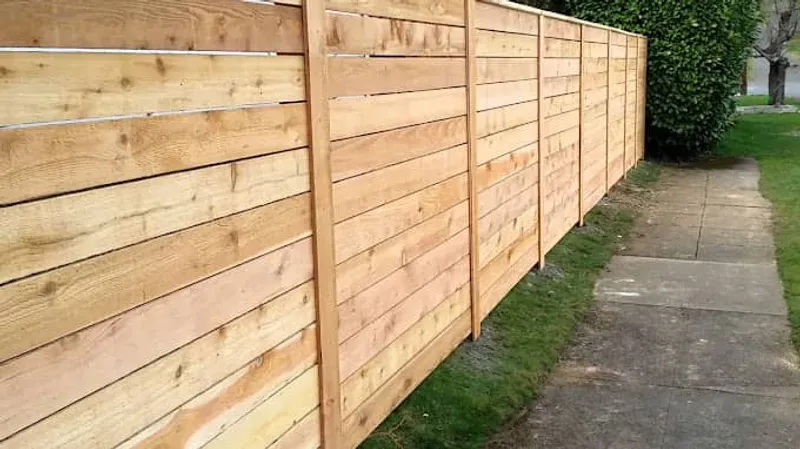
Settle the look after reviewing the full design. Horizontal boards can suit the lines of a modern patio, while vertical boards may be your preference beside a more traditional garden. Neither label tells you enough about the materials or the construction being proposed.
Ask to see examples that show posts, corners, gates, and the side facing your own yard. A close-up of attractive boards does not tell you how the whole boundary will look. If privacy is the priority, discuss board spacing and the view from an angle as well as head on.
Have the proposal name the wood species, board dimensions, post material, fasteners, and finish. Request care instructions for those exact materials. If a manufactured system is under consideration, ask for its product and installation documents.
Finally, hold a sample beside your house and patio materials. Review it in both daylight and shade. Decide whether you want the fence to stand out or sit quietly behind the planting.
How should gates and sloped ground shape the design?
Treat gates as working parts of the yard. Measure what has to pass through them: bins, garden equipment, furniture, or anything planned for a later backyard project. Ask to see the clear opening and the swing area on the drawing.
Walk the gate route while your hands are full. Check whether you can reach the latch comfortably and whether the open gate would block a path or a parking space. Discuss the hardware and how you want the gate to operate from each side.
On uneven ground, ask for a side view of the fence. Review how the top and bottom follow the slope and where gaps would open up. If pets are part of the brief, flag those gaps for the designer instead of assuming they will be handled automatically.
Ask what will happen to existing borders and planting near each post, too. The installation plan should show how the fence meets the finished ground level, not just how long it runs.
What should happen before anyone digs post holes?
The digging plan needs to include utility locating and a review of nearby trees. Texas811 requests notice at least two working days ahead of digging and explains that private underground lines need separate attention. Have the contractor confirm the required process, the responses received, and any private locating needed before excavation begins.
Point out any irrigation or other buried systems you know about, and share whatever plans you have. A remembered route is not a confirmed location.
If posts will sit near trees, check Austin's residential tree guidance. Work that affects regulated trees or their critical root zones can require review even when no tree removal is planned.
Ask how uncertain post locations will be handled. Discussing possible layout changes before the crew arrives beats making a rushed decision beside an open hole. Any change should still be checked against the approved design and property requirements.
What makes a fence estimate complete?
A complete estimate describes the installed fence and everything needed to leave the yard usable. Compare proposals against the same measured layout so you can trace where the differences come from.
Ask each proposal to identify:
- The length, height, and layout of each fence section.
- Materials, finish, and the visible construction details.
- The number of gates, their clear openings, and the hardware.
- Removal and disposal of the existing fence.
- Access, excavation, and any known site constraints.
- Who is responsible for approvals and utility coordination.
- Repair of any disturbed landscaping.
- Cleanup, a final review, and warranty terms.
Request separate pricing for optional work so you can compare it without altering the base scope. If one quote comes in much lower, ask which assumptions differ.
Discuss temporary boundaries too if the yard must stay enclosed during replacement. Agree on the sequence before the old fence comes down, especially if the household depends on that enclosure daily.
Can planting and patio placement improve privacy too?
Both deserve consideration as part of the layout. Ask whether moving a seating area or adding a planting bed would solve the particular sightline you identified at the start. That may let you concentrate the fence design where it does the most good.
Our landscape design service can coordinate the fence with seating and the routes through your yard. If planting is part of the plan, discuss mature size, available space, and site suitability through our tree and shrub planting service. Do not count on a small new plant to deliver an immediate screen.
For a seating area with an overhead privacy or shade concern, read our pergola and patio cover comparison. Use it to think through the whole outdoor room, then ask which elements belong in your specific plan.
The goal is a comfortable place to spend time, where each feature serves a clear purpose.
Ready to plan your Austin privacy fence?
Contact GardenGOAT with your survey, a few photos, and the views you want to screen. We can help you plan the fence, gates, and surrounding landscape as one project and define the work needed for a complete installation.