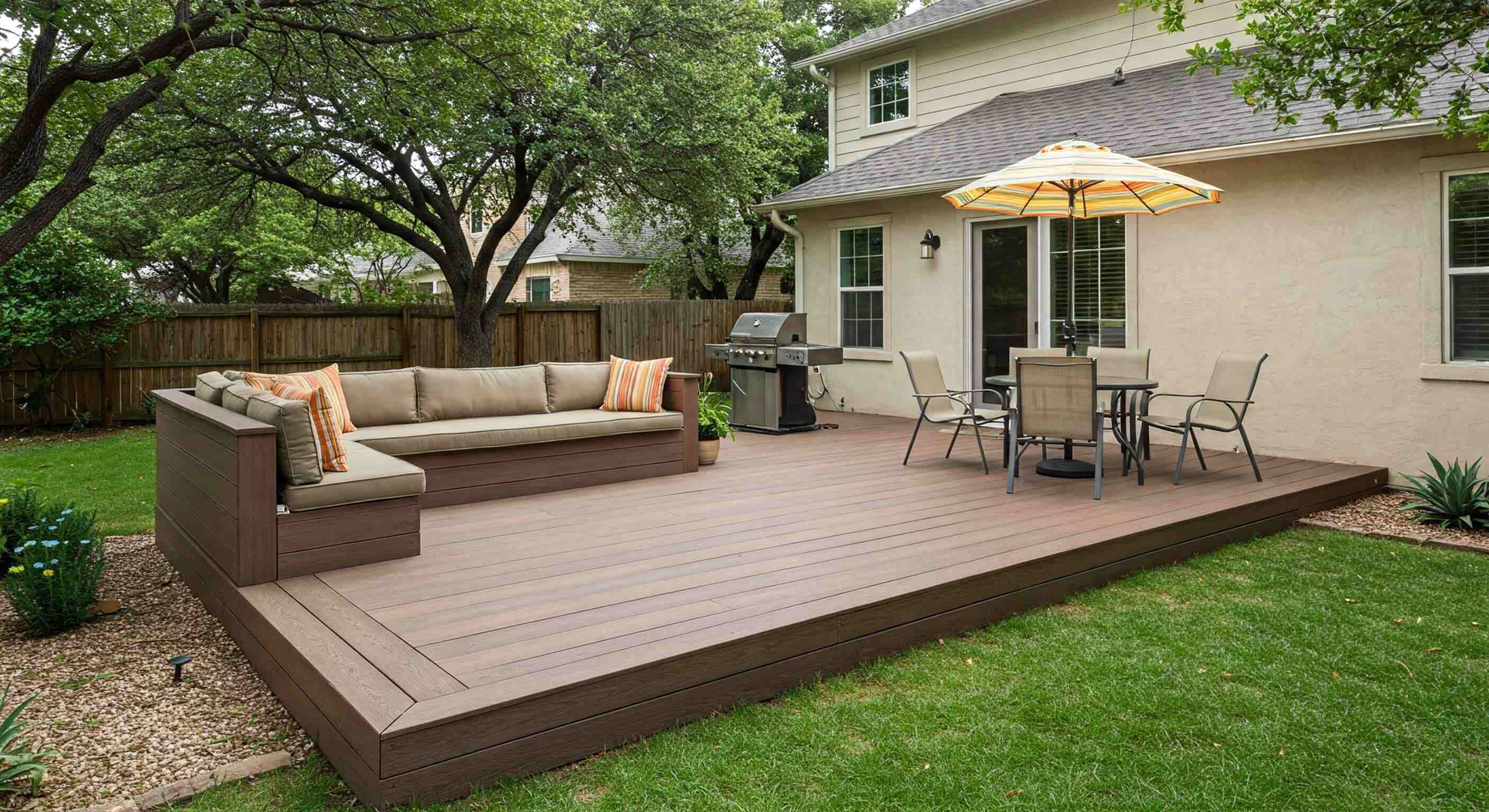
Wood or Composite Decking: What Should Austin Homeowners Choose?

Choosing deck boards feels simple right up until you start comparing samples. One has the wood grain you love. Another promises less upkeep. Then you picture bare feet on an Austin summer day, chairs sliding across the surface, and the work it takes to keep the deck looking the way you want.
At GardenGOAT, we build custom decks as part of outdoor spaces designed around daily use. We suggest comparing wood and composite through four questions: how the deck will feel, how you want it to age, what care you will accept, and what the complete build includes. The board price is only one piece of that decision.
Should you choose wood or composite for your deck?
Decide after comparing specific products, not just the two material labels. A wood quote should name the species and grade. A composite quote should name the manufacturer, product line, profile, and color. Without those details, you may be comparing very different levels of finish and performance.
Start with how you want it to look. Do you prefer the variation of natural wood, or a more consistent manufactured finish? Look at several boards side by side rather than one small sample. Bring the edge trim and stair details into that review.
Then move on to care. Ask what your exact wood species and finish will need, and request the care guide for the exact composite product under consideration. Trex's decking FAQ explains that its decking avoids the sanding, staining, and painting that come with many wood deck finishes. That is a product-specific benefit, not a reason to skip care instructions or frame inspections.
Which decking feels better in direct sun?
Do not pick either material on a promise that it stays cool. Trex notes that its boards, wood, and other outdoor surfaces can get hot in direct sunlight, and that darker decking feels hotter. Treat the product's heat guidance as part of the selection, especially for a deck used by children or pets.
Ask for samples in your preferred colors and compare them outdoors where the deck will sit. Follow the supplier's advice for handling sun-exposed samples. Look at the colors in shade and in daylight before committing to a large order.
Ask whether the layout needs shade, too. The pergola and patio cover comparison explains how to think about the times you use the yard. A shaded lounge plus an open dining area may suit your household better than treating the whole deck as one space.
Plan a comfortable route between the house and the yard as well. The spot where you step outside every day deserves as much attention as the main seating area.
How much maintenance should you expect?
Expect to care for either choice, but ask for the right care plan for each. For wood, request guidance for the selected species and finish, covering cleaning, inspection, and any refinishing needed to keep the appearance you chose. Ask to see photos of that wood after real use, not only on installation day.
For composite, keep the manufacturer's instructions with your project records. Trex's care and cleaning guide recommends warm soapy water and a soft brush for dirt on specified product lines, and it sets product-specific limits for pressure washing. Do not apply one brand's cleaning method to every deck board.
Before choosing, be honest about what you will do yourself and what you would rather hire out. Get the care requirements in writing so you can compare them after the sales conversation ends.
Include access in that discussion too. If a deck surrounds equipment, you should know how to reach it without pulling up a large area of finished decking.
Can you put new boards on an existing deck frame?
That decision calls for a frame assessment. New boards tell you nothing about whether the supports, connections, and layout beneath them suit the proposed work. Ask the builder to explain what can be inspected now and what will only become visible once the old boards come off.
Ask for written answers to these questions:
- Which parts of the existing structure can stay?
- Which repairs are included in the price?
- Which product installation requirements will govern the new boards?
- How would hidden damage be documented and priced?
- Will the stairs and railings stay, change, or be replaced?
Avoid choosing a surface first and treating the frame as an afterthought. Have the builder confirm compatibility with the decking system you selected and its installation instructions.
If replacement turns out to be necessary, use the opportunity to revisit the footprint. A slightly different layout might fix an awkward step, improve the view from the house, or make room for the furniture you actually own.
What makes one deck quote higher than another?
A deck quote covers a finished structure, not just a stack of boards. Compare proposals against the same drawing, and ask each builder to identify the included work, allowances, and exclusions.
Useful line items include removal, site preparation, supports, framing, decking, fasteners, trim, stairs, and railings. Add finishing work where it applies. Ask who is responsible for the design documents and any required approvals.
The layout deserves review as well. Built-in seating, a complex edge, and several level changes are very different requests from a simple rectangular platform. Ask which details could be simplified if you need to bring the price down.
Do not trim the scope by leaving a necessary part unresolved. Instead, compare two complete versions: perhaps a smaller deck with your preferred boards against a larger deck with another approved option. That gives you a real choice without confusing a material change with a reduction in the overall work.
How do stairs, shade, and yard access affect the choice?
They shape how the whole deck works, so draw them before the final order goes in. Mark the route from the back door to the gate, the garden, and any play area. Check whether dining chairs or a grill would interrupt that route.
GardenGOAT's Balvadino Skyway project includes a custom Ipe hot tub deck with an integrated access door. The project shows why a deck plan has to account for equipment access as well as the visible surface. It is an example of our work, not a recommendation to use that material in every backyard.
If shade is part of the project, coordinate the deck with the patio cover design. If you want to use the deck in the evening, discuss landscape lighting locations before the deck details are settled. Ask how each feature will be supported, installed, and reached for future service.
What should you check before approving construction?
Confirm the design and permit path for your address. Austin's building permit exemption page lists several conditions for a deck exemption, covering size, height, attachment, egress, and flood-hazard location. A small footprint on its own does not settle the question.
Ask your builder to identify which requirements apply and who handles each approval. Share the property survey and any existing deck plans. Provide HOA documents too if your property has design review requirements.
Before you sign off, review the drawing from inside the house and from the yard. Confirm the finished dimensions, board direction, trim color, and the positions of stairs and rails. Check the written scope against that drawing so a feature from an inspiration photo does not get mistaken for an included item.
Keep the approved plan and any later changes together in a single project folder.
What questions should you ask a deck builder?
Ask questions that reveal how your project will actually be handled. Request examples of the proposed material and similar details, then talk through what those examples do and do not share with your property.
We suggest covering these five points:
- Why does this material fit the way we will use the deck?
- What has to be confirmed before the final price is set?
- How will changes get approved during construction?
- Which care instructions and warranty documents will we receive?
- What does the final walkthrough include?
If the deck is part of a larger yard change, bring that plan into the discussion. Our landscape design service can help connect the deck to seating, planting, and the route through the yard. Treat the deck as one part of a useful outdoor space.
Ready to compare decking for your Austin home?
Contact GardenGOAT to start planning your deck. Share photos, the materials you prefer, and how much upkeep you are willing to take on. We can help you compare a complete wood and composite scope for your property.